
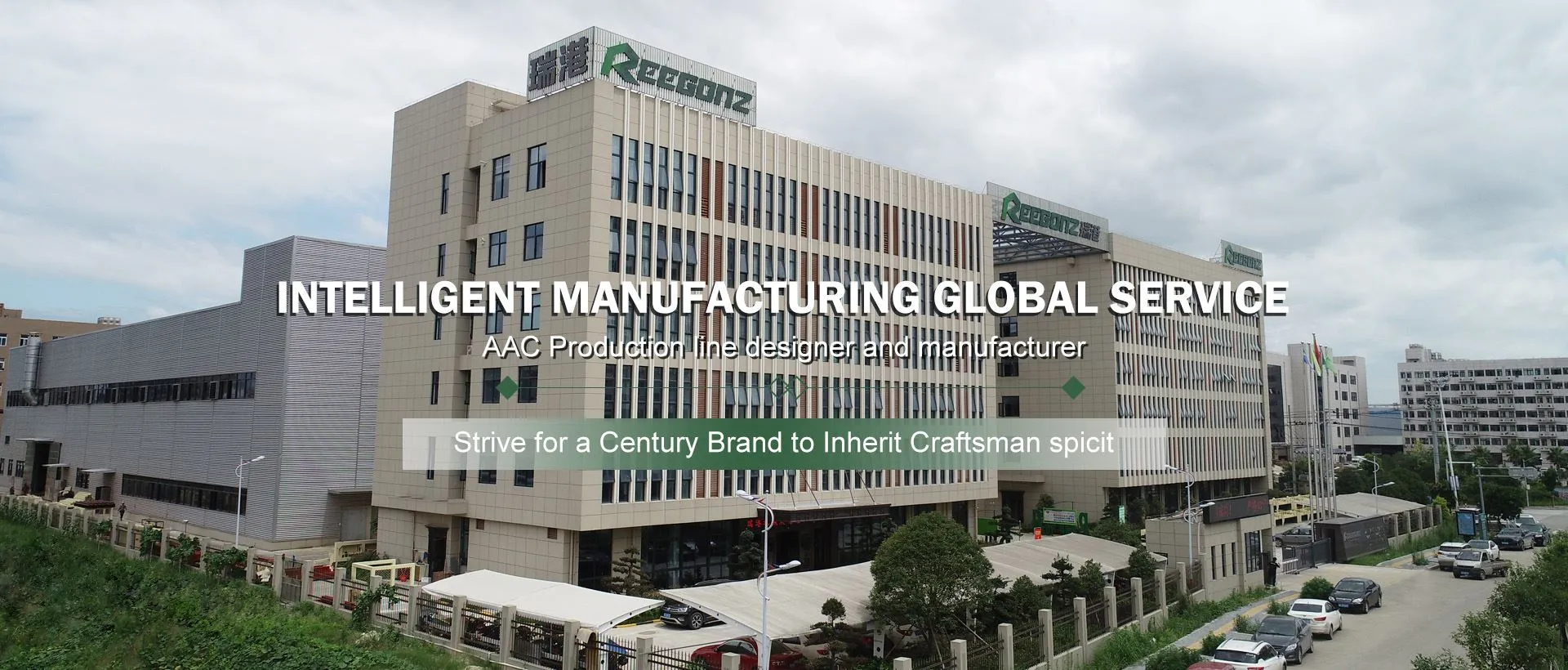
The introduction of aerated brick equipment, aerated brick equipment is also called aerated concrete equipment or aerated block equipment. Aerated block equipment mainly includes: ball mill, jaw crusher, belt conveyor, mobile mixing pouring machine, vortex slurry making Machine, double hook synchronous driving, single hook driving, spreader, steaming car, mold frame bottom plate, hoist, cutting equipment, column support rod autoclave and other equipment. What are the three key processes of aerated block equipment?
One of the keys: pouring and foaming
The ingredient pouring of the aerated block is a process of mixing various processed materials according to the proportion and then pouring into the mold, and forming the aerated block body through gas expansion. The air-entrained block body has two stages of formation of pores and body hardening. The purpose of ingredient pouring is to generate pores in the slurry to form a body that contains pores that meet the requirements. The former is achieved by the gas-generating material in the slurry, and the latter is mainly achieved by the hydration and coagulation of the cementing material of the slurry. The two properties are different and closely related. It can be said that without smooth gassing, a good body cannot be formed. At the same time, without the good hydration and coagulation of the cementitious material, smooth gassing cannot be achieved, and good green bodies cannot be obtained. All this is determined by the mixing ratio and process conditions in the batching and pouring process. It can be said that it is related to the performance of the green body, and therefore to the performance of the product produced by the aerated block equipment and the level of product quality.
The second key: static stop maintenance
The aerated block production process. After the pouring process, the slurry undergoes a series of physical and chemical changes such as gassing, thickening, and initial setting to form a green body. The green body continues to complete its hardening under certain temperature conditions. The process has reached the strength requirements for cutting. This process is a static stop. Cutting is an important process for the shape processing of the aerated block body. It is the aerated block equipment to achieve almost any appearance size when producing concrete products. Necessary means. The static stopping and cutting of the aerated block are two inseparable processes in the production process. The quality of the static stop is not only related to the realization of the previous process of casting and forming, but also affects the success or failure of the next process of cutting, and cutting is an inevitable step for the aerated block product to reach the appearance size. The static stop of the blank, that is, the standing blank to wait for it to harden, the quality of the static stop not only affects the length of the static stop, which affects the production capacity of the aerated block equipment and the normal production, but also affects The yield rate and the quality of the finished product to the production.
The third key: cutting
The cutting process of the aerated block is a processing process for the shape of the shape of the aerated block product. The range of the shape of the finished aerated block depends on the adaptability of the cutting process.
Cutting tools must meet certain requirements:
1. Flexible control of cutting size
2. The accuracy of cutting size
3. The production capacity of cutting tools. In addition, the cutting tool is simple to operate, convenient to maintain, and has other shape processing capabilities for the blank colleague, and the degree of damage to the blank is also a basic requirement.


