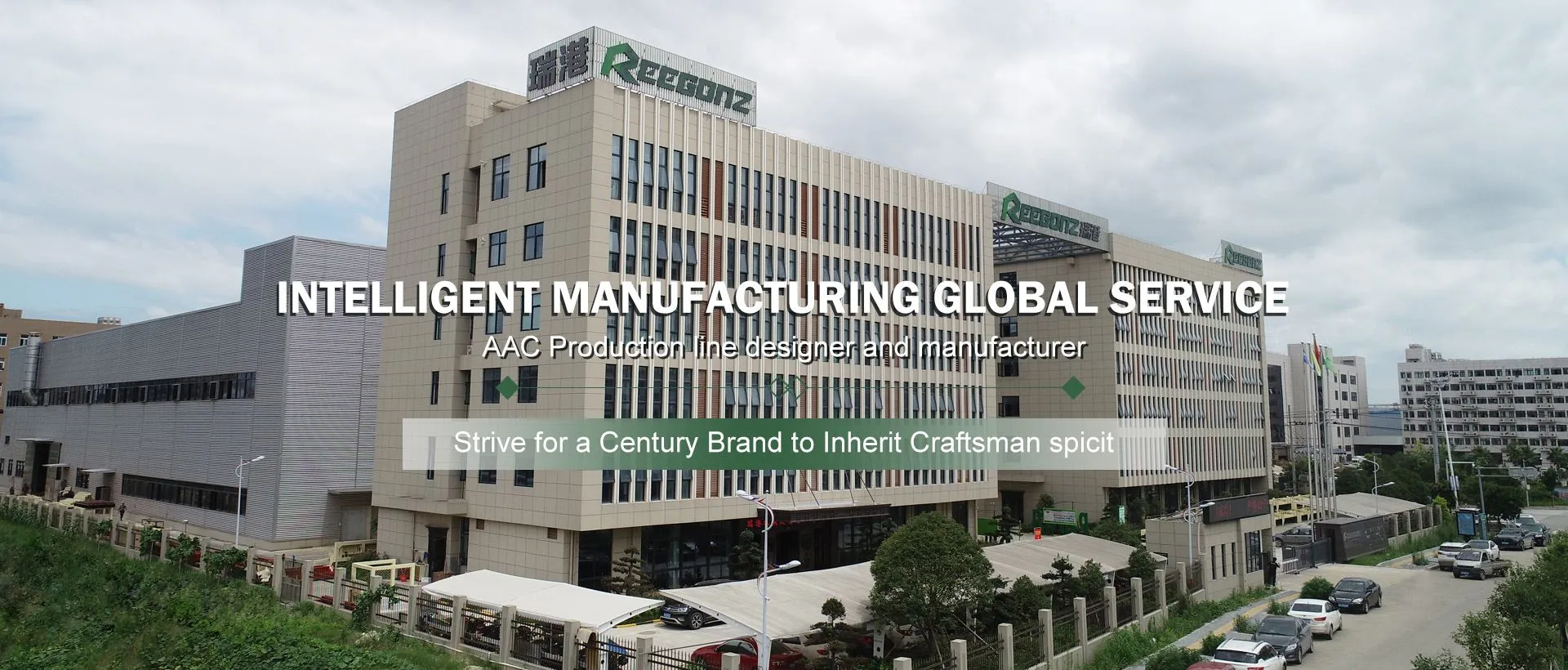


Zhejiang Ruigang Machinery Co., Ltd. is a comprehensive enterprise specializing in the development, production, and sales of concrete steaming pressure. Participating units formulated by the national standard standards in the industry ranks among the top comprehensive strength. The company currently has more than 100 employees, has more than 40 patents (5 invention patents), 3 software copyrights, and 22 trademarks.
Complete qualifications
The company has adopted the ISO9001 international certification and the first (set) product of the key areas of Zhejiang Province's equipment manufacturing industry, the Zhejiang manufacturing type character identification. Zhejiang Province's science and technology enterprises, Wenzhou high -growth enterprises, business integrity level AAA and other honors.
Sustainability
The company focuses on the development of intelligent environmental protection building materials equipment, is committed to the success of customers and the company's success, and is committed to sustainable development. It uses innovation to create value for customers.
Wide Product Range
Zhejiang Ruigang Machinery Co., Ltd. is a comprehensive enterprise specializing in the development, production, and sales of concrete steaming pressure. The company's products cover a variety of core products such as multi -functional block rotating fixture, air flip removing bottoming machine, multi -functional block separator, ferry vehicle, conveying and cutting mechanism, etc., with more than 30 series of products.
Strict Quality Control
The company has always put technological innovation first, attach importance to the cultivation and introduction of scientific and technological talents, increase investment in scientific research, and establish an incentive mechanism; at the same time, strengthen close cooperation with colleges and universities and well -known technology companies to jointly develop new products to create automatic assembly lines Unmanned workshop.




What is AAC Brick Cutting Machine
AAC brick cutting machine is the main equipment for Autoclave Aerated Concrete(AAC) products, it`s necessary core equipments for capacity 50,000-600,000m3/year, it is also necessary to increase the AAC capacity. AAC brick cutting machines are used to precisely cut large AAC blocks into smaller pieces or shapes to suit specific construction requirements. It is widely popular in many industries due to its durable standards, solid construction and excellent strength.
Cost Savings
One of the major advantages of the AAC brick cutting machine is that it eliminates the need for manual labor and saves time. The machine operates using a hydraulic cutting system which helps to cut blocks with speed and efficiency. This means that in no time, you can get a large number of blocks accurately cut to meet your desired requirement.
Improved Safety
Another advantage of the AAC brick cutting machine is that it enhances safety in the working environment. The machine is designed with safety features that protect the user from accidents and potential injuries. This means that the user can work with it without fear of getting hurt.
Accuracy
Precise cutting ensures that AAC bricks fit seamlessly into the construction design, eliminating the need for adjustments. Machines ensure uniformity in brick size and shape, enhancing the quality of the construction.
Increased Production Speed
By automating the cutting process, AAC brick cutting machines significantly speed up production compared to manual cutting methods. This increased efficiency can lead to a higher output of AAC blocks in a shorter time frame, allowing manufacturers to meet larger orders and tight project deadlines more effectively.
Manual AAC brick cutting machine: This type of machine is operated manually, and it is suitable for small-scale production. The machine is relatively simple to use, and it can cut blocks into various sizes, depending on the user’s needs.
Semi-automatic AAC brick cutting machine: This machine is more advanced than the manual type, and it requires less manual intervention. It is equipped with hydraulic systems that enhance efficiency, and it can cut blocks into precise sizes with minimal error.
Fully-automatic AAC brick cutting machine: This is the most advanced type of AAC brick cutting machine available in the market today. It is fully automated, and it requires no manual intervention. It can cut blocks into precise sizes at high speeds, making it suitable for large-scale production.
Wire cutting machine: This type of machine uses a wire to cut AAC bricks into specific shapes and sizes. It is suitable for cutting bricks into special shapes such as curves or chamfers. It is ideal for the production of decorative blocks used in landscaping and interior design.
Bridge cutting machine: This machine uses a bridge to support the cutting wire, making it suitable for cutting AAC bricks into large sizes. It is ideal for the production of blocks used in the construction of bridges and other large structures.
Mould Setting
The turnover traveling crane lifts the pre-cured concrete body and mould to the station of AAC brick cutting machine. Tilting block hoister turns over the mould 90°and puts it on the support of cutting trolley.
Demolding of AAC Brick Cutting Machine
The turnover hoister manipulator can automatically do demolding. It makes the concrete body and side plate stand sideways to the first cutting trolley. After demolding, the concrete body can do precisional cutting step-by-step on the AAC brick cutting machine.
Longitudinal Cutting of AAC Brick Cutting Machine
First, the first cutting trolley takes the concrete body to the longitudinal cutting device for longitudinal cutting. During longitudinal cutting, the side faces of concrete body can be cut by cutting blade and cutting steel wire.
Transverse Cutting of AAC Brick Cutting Machine
The concrete body is sent to the central position of the AAC brick cutting machine and stops. The transverse cutting rack descents vertically form the top to the bottom, and then does transverse cutting. During the cutting process, the cutting steel wire does serrate swinging to finish serrate horizontal cutting.
Sent the Cut Concrete Body to Vacuum Suction Hood
After transverse cutting, we start the trolley replacement device. The trolley under the AAC cutting machine (AAC brick cutting machine) replaces the cylinder and raises the cut concrete body and side plate. The bottom first trolley returns to the original position to take new concrete body to be cut. The second trolley replaces the position of the first trolley and sends the concrete body and side plate to the vacuum suction hood position. The draught fan stops and shakes off the suctioned waste into the waste recycling tank.

Modern AAC brick cutting machines are engineered with features that promote safety, ease of use, and durability. Typically constructed from robust materials like steel, they are designed to withstand the rigors of construction environments. Features may include dust suppression systems, noise reduction technology, and ergonomic controls, which collectively enhance the operational experience.
How to Choose The Right AAC Brick Cutting Machine
Capacity: The first factor to consider is the capacity of the machine. Determine your production requirements and choose a cutting machine that meets your specific needs. A bigger machine will enable you to cut more bricks in a shorter time, but it may also increase your costs.
Quality: Ensure that the machine you purchase produces high-quality cuts. The cutter head should be sharp and accurate, and the blades should be made of durable material that can withstand the cutting process.
Price: Cost is a significant factor when selecting an AAC brick cutting machine. Determine your budget and look for a machine that meets your needs without exceeding the budget. You don’t have to compromise on quality for price, but you can find a machine that offers value for money.
Durability: AAC brick cutting machines are used for heavy-duty cutting, so the machine should be strong and durable. Look for a machine that is made of sturdy materials like steel and has a structure that can withstand wear and tear.
Safety: The AAC brick cutting machine utilizes a considerable amount of power to cut through the blocks. It would be best to look for a machine that has a safety mechanism to avoid accidents.
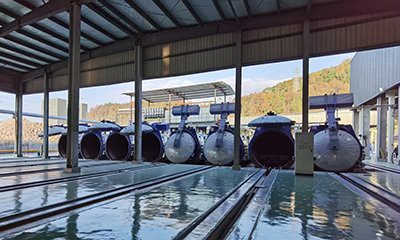
Industrial steam autoclaves (also known as still kettle) are pressure vessels used to process parts and materials, which require exposure to elevated pressure and temperature. The manufacture of high-performance components from advanced composites often requires autoclave processing. Industrial steam autoclaves are used in manufacturing of composite, glass, cement, vulcanizing, food processing, and medical waste treatment.

Improved Quality and Consistency: One of the main benefits of using autoclaves in the industrial is the improved quality and consistency of composite materials and components. The controlled environment of the autoclave allows for precise curing of composite materials, ensuring that they achieve their desired properties.
Increased Efficiency: Autoclaves can also improve the efficiency of the manufacturing process in the industrial. The automation of the autoclave process allows for the rapid curing of composite materials, reducing the time and labor required for this step.
Cost Savings: The use of autoclaves in the industrial can also lead to cost savings by reducing the need for manual labor and increasing the efficiency of the manufacturing process. In addition, the improved quality and consistency of composite materials and components produced using autoclaves can help reduce the need for rework and repairs, leading to further cost savings.
● High Capacity and Productivity
Industrial autoclaves come in large sizes, allowing them to handle significant volumes of materials in one cycle. This high-capacity capability boosts productivity by enabling industries to sterilize or process large batches at once, minimizing downtime and increasing operational efficiency.
The exact process is dependent on the material being processed, but in general, items are placed inside the industrial steam autoclave, subjecting them to high amounts of pressure, vacuum and/or temperature. This results in the item being "processed." To go a little deeper, sometimes additional additives are introduced into the autoclave during the process, such as water, chemicals or steam.
A vacuum is created inside an autoclave using either a pump or an eductor. It is usually used to remove the existing air inside the autoclave before an additional additive is introduced into the autoclave. Sometimes vacuum is also used as the final step in the process to clean or dry the material before it is removed from the autoclave.
Pressure is created inside an autoclave using either a pump or steam. A pump is usually used to “press” an additive into the material being processed. Steam is used to raise the pressure inside the autoclave and increase the temperature inside the autoclave. This option is normally used when the material processed is either being cured or dried inside the autoclave.
These conditions are maintained inside the industrial autoclave for a set time period to get the desired results. Once the process is complete, the autoclave door is opened, and the newly processed materials are removed.

Industrial steam autoclaves are typically designed to reach temperatures between 250°F and 275°F (121°C and 135°C). The exact temperature and duration depend on the type of load and the specific sterilization process being used. For especially heat-resistant items, some autoclaves may reach even higher temperatures, depending on their design and purpose.
Heating: After the semi-finished aerated brick is hoisted into the steam curing car and put into the autoclave, the high temperature produced by the autoclave begins to exchange heat with the culture body. Through a series of processes, the temperature in the autoclave is completely consistent with the temperature inside the cut aerated brick, and it begins to enter the constant temperature stage.
Constant temperature: This stage is to make the aerated block fully carry out the hydrothermal synthesis reaction, thereby producing hydrate and reaching the necessary crystallinity, and improving the strength of the aerated block.
Cooling: After the constant temperature stage of the autoclave is completed, the aerated blocks enter the next stage of cooling. The cooling process has no great influence on the quality of aerated bricks, but the speed of cooling affects the production efficiency of aerated blocks.
Pressure treated lumber
There are a variety of products made from pressure-treated wood. From the boards that make up your back deck to the railroad ties that cross the country.
Vulcanizing rubber
Untreated rubber is useless. After it’s treated, it’s used for many purposes, like tires, hoses, shoe soles, toys, bowling balls, hockey pucks, and numerous other items.
Creating aerated concrete
Aerated concrete is a common building material for walls, floors, and roofs. It is processed inside of an autoclave to create the air pockets within the concrete item. This is what makes the concrete block so light in weight and a great sound insulator.
Producing fiber cement
Fiber cement is a composite material used on the exterior of commercial and residential buildings.
Upper opening door: Composed by weight box, swinging arm and mounting plate for industrial autoclave door swing up and down.
Hand control safety device: Hand control interlocking apparatus is fastened to industrial autoclave flange side, composed by dead-man’s handle, sleeve, extension rod, ball valve and so on.
Hand control reducer: Be fastened to industrial autoclave, through gear match with tooth plate to drive industrial autoclave rotate along the axis and make sure the industrial autoclave door can open and close tightly.
Support: Used to support industrial autoclave body, composed by intermediate support, movable support, end support. Except intermediate support, other support is movable on the pin roller toward the axis direction.
Insulation layer: Reduce the heat loss during operation (according to customer’ needs to design the thickness of the industrial autoclave).
Sealing Device: Composed by rubber seal, stop valve and admission bend pipe. Rubber seal is inlayed in industrial autoclave body. During operation, steam get in to the sealed groove, seal ring appress with the industrial autoclave top to achieve seal function.
Valves and Gauge: Include pressure gage, safety valve, thermometer, thermocouple, ball valve for operation condition inspection.
Electric apparatus safety interlock device: Control cabinet, pressure controller, industrial autoclave door locking device, pressure warning unit.
Cleaning
Clean the autoclave chamber and exterior with a damp cloth to remove any residue. Use non-abrasive cleaning agents to prevent damage to surfaces. Ensure no debris or residue is left in the chamber after use.
Weekly Maintenance
Remove and clean the strainers or filters to prevent blockages and ensure proper drainage. Check for any leaks or unusual noises in steam lines and valves. Address any issues immediately.
Monthly Checks
Apply appropriate lubricant to door hinges and locking mechanisms to ensure smooth operation. Verify that safety valves operate correctly to release excess pressure when needed. If the autoclave uses untreated water, descale the chamber monthly to prevent mineral buildup, which can impede heating efficiency.
Annual Servicing
Schedule a comprehensive inspection by a certified technician to assess the autoclave's overall condition and perform advanced diagnostics. Ensure the pressure vessel adheres to industry regulations and is certified as safe for use.
As one of the leading aac panel system manufacturers and suppliers in China, we warmly welcome you to buy customized aac panel system from our factory. All products for your brands are with high quality and competitive price. For pricelist and quotation, contact us now.
AAC Panel Reinforcement, Batching Plant, Slurry Plant(0/10)

