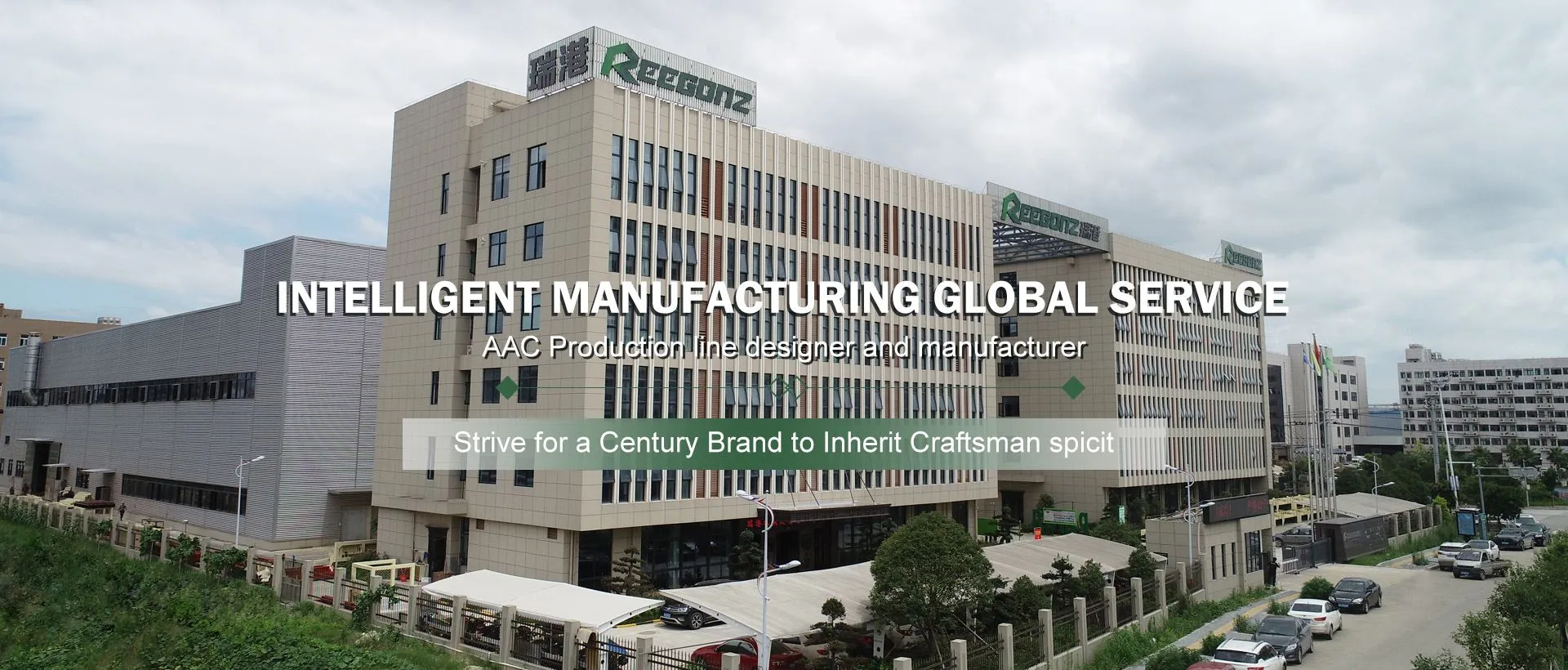


Zhejiang Ruigang Machinery Co., Ltd. is a comprehensive enterprise specializing in the development, production, and sales of concrete steaming pressure. Participating units formulated by the national standard standards in the industry ranks among the top comprehensive strength. The company currently has more than 100 employees, has more than 40 patents (5 invention patents), 3 software copyrights, and 22 trademarks.
Complete qualifications
The company has adopted the ISO9001 international certification and the first (set) product of the key areas of Zhejiang Province's equipment manufacturing industry, the Zhejiang manufacturing type character identification. Zhejiang Province's science and technology enterprises, Wenzhou high -growth enterprises, business integrity level AAA and other honors.
Sustainability
The company focuses on the development of intelligent environmental protection building materials equipment, is committed to the success of customers and the company's success, and is committed to sustainable development. It uses innovation to create value for customers.
Wide Product Range
Zhejiang Ruigang Machinery Co., Ltd. is a comprehensive enterprise specializing in the development, production, and sales of concrete steaming pressure. The company's products cover a variety of core products such as multi -functional block rotating fixture, air flip removing bottoming machine, multi -functional block separator, ferry vehicle, conveying and cutting mechanism, etc., with more than 30 series of products.
Strict Quality Control
The company has always put technological innovation first, attach importance to the cultivation and introduction of scientific and technological talents, increase investment in scientific research, and establish an incentive mechanism; at the same time, strengthen close cooperation with colleges and universities and well -known technology companies to jointly develop new products to create automatic assembly lines Unmanned workshop.


What is Jaw Crusher Plant
A jaw crusher is used in a wide variety of applications, including construction and recycling demolition, quarrying and mining, asphalt production, etc. It reduces large aggregates to smaller aggregate. Jaw crushers are an excellent choice for primary crushing in a wide variety of applications. It is designed to process large feed size and to endure less wear from abrasive material.
High capacity
Jaw crushers are designed to handle large volumes of material, making them ideal for high-capacity crushing applications.
Versatility
Jaw crushers can be used for a wide range of materials, including hard and abrasive materials, as well as soft and non-abrasive materials.
Low operating costs
Jaw crushers are simple and easy to operate, and require relatively low maintenance, resulting in lower operating costs.
Uniform product size
Jaw crushers produce a uniform product size, which is important for many industries, such as construction and mining, where consistent product quality is essential.
High reduction ratio
Jaw crushers have a high reduction ratio, which means that they can reduce the size of large rocks or ores to a smaller size more efficiently than other types of crushers.
Durability
Primary jaw crushers are designed to withstand heavy-duty use and are typically built with strong and durable materials to ensure a long service life.
A jaw crusher uses compressive force for breaking material. This mechanical pressure is achieved by the crusher's two jaws dies, one of which is stationary and the other is movable. These two vertical manganese jaw dies create a V-shaped cavity called the crushing chamber, where the top of the crushing chamber is larger than the bottom. Jaw Crushers are sized by the top opening of the crushing chamber. For example, a 32 x 54 Jaw Crusher measures 32" from jaw die to jaw die at the top opening or gape opening and 54” across the width of the two jaw dies.
The narrower bottom opening of the crushing chamber is used to size the discharge material. A toggle plate and tension rods hold the pitman tight near the bottom of the moving swing jaw. The toggle plate is designed to perform like a fuse and protect the crusher in the event that an uncrushable material enters the crushing chamber. As a rule, Jaw Crushers have a 6:1 or 8:1 ratio for crushing material. Still using the 32 x 54 Jaw Crusher example, the top size of the feed entering the crushing chamber has to follow the F80 rule that 80% of the top size feed material is smaller than the gape opening. Using the F80 rule with the 32 x 54 Jaw Crusher, the 32” gape opening equals a 26” top sized feed, and with the 6:1 ratio of reduction, the discharge setting would be around 4”.
Since the crushing of the material is not performed in one stroke of the eccentric shaft, massive weighted flywheels are attached to the eccentric shaft and powered by a motor. The flywheels transfer the inertia required to crush the material until it passes the discharge opening.
What Are the Three Stages of a Jaw Crusher Plant?
Primary Crushing
This is the first stage of the crushing process. In general, the size of the feed material, which is between 800 and 1500 mm, is reduced to between 150 and 300 mm.
Secondary Crushing
This is the second stage of crushing. Feed size, which is around 150 to 300 mm, of the rock or ore from the primary crushing process is reduced to between 50 and 80 mm.
Tertiary Crushing
This is the third stage of crushing. The size, which is around 50–80 mm, of the ore or rock from the secondary crushing process is reduced to between 5 and 12 mm.
Single-toggle jaw crushers
Single-toggle jaw crushers (also known as overhead eccentric crushers) operates with its eccentric shaft above it. In here, the eccentric is built into the the swing jaw plate that moves in an up and down motion as the flywheel is rotated. A single-toggle jaw crusher pivots at the bottom of the swing plate, causing the jaw to move in an arc-like direction. The material is crushed when the moving crusher compresses it against the fixed plate.
Double-toggle jaw crushers
In a double-toggle jaw crusher, the moving crusher jaw is driven by the eccentric shaft that moves the front and rear toggles up and down. Each shaft revolution causes the moving crusher jaw to close at the downstroke and open up during the upstroke. The toggle is kept in place by spring-loaded tension rod. The eccentric is found right behind the swinging jaw which prevents the eccentric from getting damaged since there is no shock loading transferred to the bearings and the shaft when the material is being crushed.
Mining Industry
One of the most common applications of jaw crushers is in the mining industry to crush large rocks into smaller pieces. These machines are used to reduce the size of ore in preparation for further processing and refining. The crushing process helps to separate valuable minerals from the waste rock, making it easier to extract and process the valuable materials.
Quarrying Industry
Jaw crushers are used in the quarrying industry to crush large rocks into smaller pieces. They are used to crush stone, concrete, and asphalt for use in construction projects. Jaw crushers are also used in the coal industry, where they are used to crush coal before it is processed and transported to power plants or other end users.
Construction Industry
Jaw crushers are also commonly used in the construction industry, where they are used to crush materials such as concrete and asphalt for use in road construction and building projects. These machines are particularly useful for recycling materials, as they can break down old concrete and asphalt into smaller pieces that can be reused in new construction projects.
Recycling Industry
Another application field for jaw crushers is in the recycling industry to crush concrete, asphalt, and other construction materials. These machines are used to crush a wide range of materials, including glass, plastic, metal, and paper, for use in the production of new products. Jaw crushers are particularly effective at breaking down materials that are difficult to recycle, such as electronic waste and construction waste.

Regularly inspect the machine for any signs of wear and tear.
Lubricate the bearings and other moving parts according to the manufacturer's instructions.
Replace worn or damaged parts in a timely manner to prevent further damage.
Check the tightness of the bolts and nuts on a regular basis.
Clean the machine regularly to prevent build-up of dirt and debris.
Regularly check the discharge setting and make adjustments as needed.
Perform routine maintenance on the machine, such as replacing the toggle plate, adjusting the discharge opening, and tightening the belt.
Train operators to safely operate and maintain the jaw crusher.
Conduct regular safety inspections and identify and correct any potential hazards.
Record all maintenance activities and keep accurate records of machine performance.
A vertical bucket elevator is a mechanical device used to move bulk materials vertically. It consists of a series of buckets attached to a belt or chain that operates over pulleys or sprockets. The buckets scoop up the material from a lower level, elevate it to a higher level, and then discharge it through an outlet. This efficient and reliable system is widely used in industries such as agriculture, food processing, mining, and manufacturing.

Space saving: Vertical bucket elevators can efficiently transport materials in the vertical direction, saving ground space.
Flexible and diverse applications: Vertical bucket elevators are suitable for vertical conveying of various materials, including granules, powders and block materials.
Large conveying capacity: Vertical bucket elevators can handle a large amount of materials and have a high conveying speed. It can meet the needs of large-scale material conveying on the production line and improve production efficiency.
Strong adjustability: The conveying speed, spacing between buckets and capacity of the vertical bucket elevator can be adjusted according to material characteristics and production needs.
Reliable and stable: The vertical bucket elevator adopts a sturdy structure and a reliable drive device, which can stably transport materials.
High degree of automation: The vertical bucket elevator can cooperate with other equipment, such as conveyor belts, control systems, etc. to realize an automated material conveying process.

A vertical bucket elevator operates through a straightforward mechanism to lift materials vertically between different levels. It's made up of a bunch of buckets connected to a chain or belt that moves in a loop. Initially, the buckets are filled with the desired material at the bottom of the elevator. As the chain or belt moves continuously, the filled buckets are lifted upward along the elevator's vertical path. At the top, the buckets tip over, releasing the materials into a discharge chute or conveyor for further processing or distribution. Meanwhile, the empty buckets continue their journey downward, ready to be filled again. This continuous cycle ensures a steady flow of materials from one level to another, facilitating efficient handling and transportation in various industries.
What are the Different Types of Vertical Bucket Elevators?
Centrifugal bucket elevators: These types of bucket elevators are used to move bulk materials. The buckets in these elevators are used as loading equipment. When the material passes under the luggage wheel or sprocket, the material will be picked up by the bucket. Then, the centrifugal force on the pulley head discharges the material from the bucket to the discharge chute. Buckets are installed at specific intervals to prevent emission interference from other buckets, which operate at very high speeds.
Continuous bucket elevators: These elevators are specifically designed to handle fragile materials, and extra care must be taken when handling to avoid damage or degradation. Continuous bucket elevators are mainly used to transport light materials that should avoid aeration. The material is added to the bucket through the feed chute. In these elevators, the buckets are tightly positioned on the belt, and they travel at a relatively slow speed, helping to prevent material from spilling.
Positive discharge bucket elevators: These are similar to centrifugal bucket elevators and are ideal for conveying food-grade materials. The positive discharge hopper elevator is the most suitable for the material, it really sticks to the side of the hopper. The positive discharge bucket elevator rotates at a lower speed, and the bucket unloading is performed using a mechanical trip.
Vertical bucket elevators are commonly used in grain processing plants to lift grains, rice, flour, and other materials from the ground or lower levels to storage silos, mills, or other processing equipment.
In mining and ore processing, vertical bucket elevators are used to lift ores, slag, coal, and other materials from underground or lower levels to higher processing equipment or storage silos.
In the chemical and pharmaceutical sectors, vertical bucket elevators are often used to lift chemical raw materials, granular drugs, powders, and other substances from the ground or lower levels to reactors, mixers, dryers, or other processing equipment.
In the construction materials and cement industry, vertical bucket elevators are widely used to lift limestone, gypsum, sand, cement, and other materials from the ground or lower levels to kilns, coal mills, mortar mixers, or storage silos.
In the fertilizer production process, vertical bucket elevators are used to lift fertilizer raw materials, granular fertilizers, and other substances from the ground or lower levels to mixers, granulators, packaging machines, or storage silos.
Assess Your Material
The first step is understanding the material you need to handle. Consider factors like the type of material (grains, ores, powders, etc.), particle size, density, and abrasiveness. These characteristics will guide you in choosing the appropriate bucket design, material, and capacity to prevent material degradation and ensure smooth handling.
Determine Required Capacity
Evaluate the amount of material you need to move within a given time frame. This will help you determine the required capacity of the bucket elevator. Factors such as the speed of the elevator, the size of the buckets, and the spacing between them all contribute to the overall capacity.
Vertical Lift Height
The vertical distance the material needs to be lifted is a critical factor. Different vertical bucket elevators have varying lifting capabilities, so ensure the elevator you choose can reach the desired height without compromising efficiency or safety.
Space Constraints
Consider the available space for installing the vertical bucket elevator. Some environments have limited space, making it necessary to choose a compact design that still meets your material handling needs.
Material Characteristics
Materials with unique properties, such as corrosiveness or hygroscopicity, require specific bucket materials and coatings. Ensure the chosen vertical bucket elevator is equipped to handle the challenges posed by your material to ensure longevity and efficiency.
Required Speed
The speed of the vertical bucket elevator affects both capacity and wear on the equipment. Strike the right balance between speed and efficiency to achieve optimal performance.
Safety Features
Prioritize safety by opting for vertical bucket elevators that come with essential safety features such as anti-runback systems, belt misalignment sensors, and emergency stop buttons. Depending on your industry and application, additional safety measures might be necessary.
Maintenance and Accessibility
Consider the ease of maintenance and accessibility for cleaning and repairs. Select a design that allows for quick and straightforward maintenance, reducing downtime and minimizing disruptions to your operations.
As one of the leading batching plant manufacturers and suppliers in China, we warmly welcome you to buy customized batching plant from our factory. All products for your brands are with high quality and competitive price. For pricelist and quotation, contact us now.
mobile batch mix plant, batching and mixing of concrete, concrete batch mix plant(0/10)

