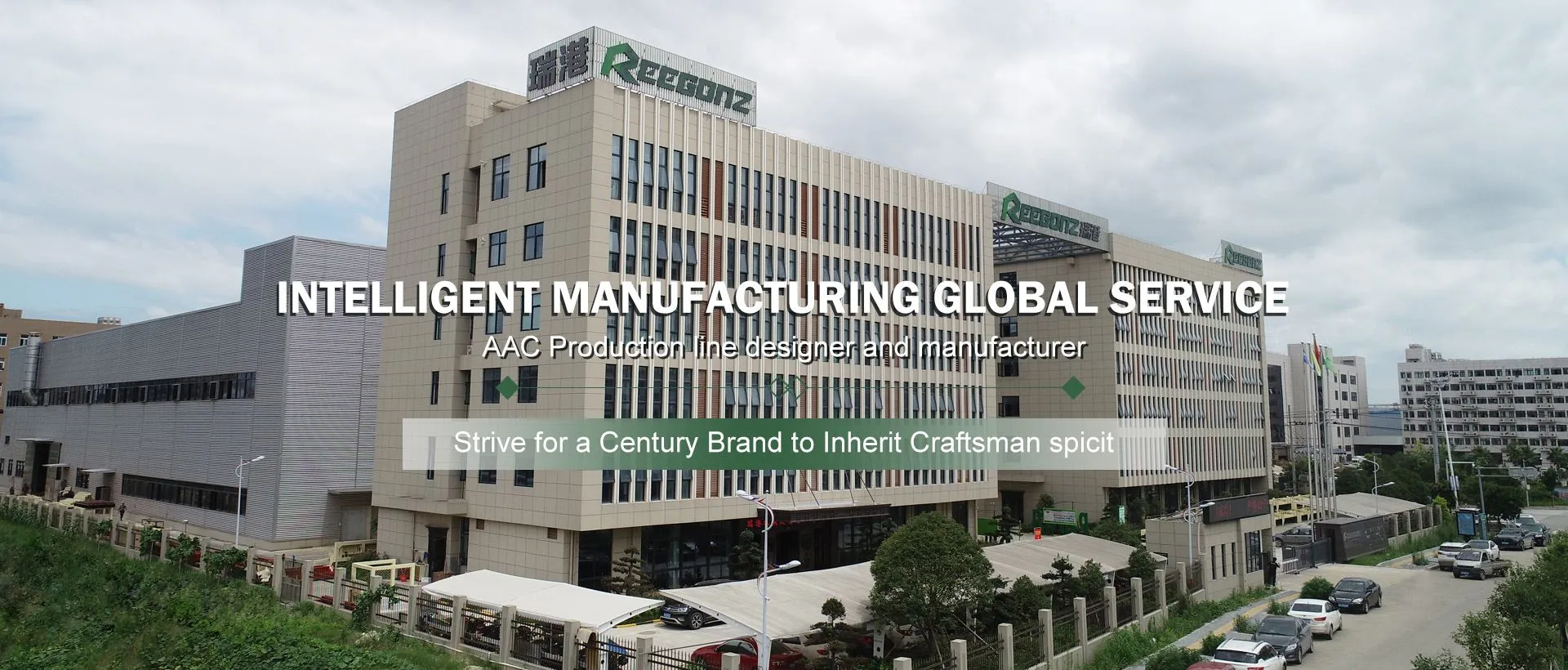


Zhejiang Ruigang Machinery Co., Ltd. is a comprehensive enterprise specializing in the development, production, and sales of concrete steaming pressure. Participating units formulated by the national standard standards in the industry ranks among the top comprehensive strength. The company currently has more than 100 employees, has more than 40 patents (5 invention patents), 3 software copyrights, and 22 trademarks.
Complete qualifications
The company has adopted the ISO9001 international certification and the first (set) product of the key areas of Zhejiang Province's equipment manufacturing industry, the Zhejiang manufacturing type character identification. Zhejiang Province's science and technology enterprises, Wenzhou high -growth enterprises, business integrity level AAA and other honors.
Sustainability
The company focuses on the development of intelligent environmental protection building materials equipment, is committed to the success of customers and the company's success, and is committed to sustainable development. It uses innovation to create value for customers.
Wide Product Range
Zhejiang Ruigang Machinery Co., Ltd. is a comprehensive enterprise specializing in the development, production, and sales of concrete steaming pressure. The company's products cover a variety of core products such as multi -functional block rotating fixture, air flip removing bottoming machine, multi -functional block separator, ferry vehicle, conveying and cutting mechanism, etc., with more than 30 series of products.
Strict Quality Control
The company has always put technological innovation first, attach importance to the cultivation and introduction of scientific and technological talents, increase investment in scientific research, and establish an incentive mechanism; at the same time, strengthen close cooperation with colleges and universities and well -known technology companies to jointly develop new products to create automatic assembly lines Unmanned workshop.


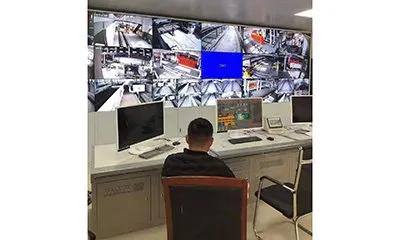
What is Plc Control System
Programmable Logic Controllers (PLCs) control system are advanced electronic devices designed to precisely control, monitor, and automate various electromechanical processes in industry. PLC control systems use complex logic and programmable algorithms to enable defined actions and operations, significantly enhancing the efficiency and reliability of industrial systems.
Reliable
It's easy to upload and download various programmes onto a PLC control system. All program logic remains in the PLC memory, so it won’t cause wiring errors and will remain reliable with solid-state components.
Flexibility
You can edit or create a new program on a PLC control systems without a whole circuit rewire. Instead, you determine the connection and performance of I/O with a user program. A PLC system can increase flexibility with extra function modules to enhance the PLC performance.
Compact
PLC control systems reduce hardwiring inconveniences often associated with traditional relay control circuits. A PLC is also more compact, taking up less space than conventional; relay-based control systems.
Real-time results
Fast operation alongside the PLC control system managing real-time results is what makes a PLC so effective. No other industrial technology has the same ability to control operations as quickly or accurately.
Troubleshoot
A PLC control systems can troubleshoot any software or hardware issues just like a computer. Tracing and correcting any malfunctions can be solved efficiently without expert investigation or additional expense.
The Three Fundamentals of a PLC Plc Control System Include
CPU/processor
A PLC central processing unit or processor is the principal part of any digital computer system. A PLC CPU is a microprocessor-based system that controls the entire PLC with commands through analysis of input devices.
I/O (Input/Output) section
This feature of the PLC transfers the data to and from the CPU. Relevant I/O modules work as the data interface between CPU and output devices and control them with I/O cards.
PLC programming
A programming port on the CPU links CPU cards and devices. PLC programming designs and defines I/O solutions to allow the PLC to function effectively.
Manufacturing Automation
PLC control systems are extensively used in manufacturing industries for automating production processes, including assembly lines, packaging, material handling, and quality control. They control the operation of machines, robots, conveyors, and other equipment to streamline production, improve efficiency, and ensure product consistency.
Industrial Control Systems
PLC control systems are integral to industrial control systems used in sectors such as oil and gas, chemical processing, power generation, and water treatment. They regulate complex processes, such as temperature control, pressure monitoring, flow control, and level sensing, to maintain safe and efficient operation of industrial plants and facilities.
Material Handling and Logistics
PLC control systems automated material handling systems, such as conveyor belts, sorting systems, AGVs (automated guided vehicles), and warehouse automation solutions. They optimize the flow of materials, manage inventory, and facilitate seamless logistics operations in warehouses, distribution centers, and manufacturing facilities.
Food and Beverage Processing
PLC control systems are widely used in the food and beverage industry for process automation, batch control, recipe management, and packaging. They regulate mixing, blending, cooking, pasteurization, filling, and labeling processes to ensure product quality, consistency, and compliance with food safety standards.
Water and Wastewater Treatment
PLC control systems the operation of water treatment plants, wastewater treatment facilities, and distribution networks to monitor water quality, regulate chemical dosing, and manage pumping and filtration processes. They help optimize resource usage, reduce energy consumption, and ensure compliance with environmental regulations.
Renewable Energy Systems
PLC control systems are used in renewable energy systems, such as solar power plants, wind farms, and hydroelectric stations, to monitor and control power generation, distribution, and grid integration. They optimize the performance of renewable energy sources, manage power output, and ensure stability and reliability of the electrical grid.

The block making machine is controlled by PLC, with strong anti-interference ability and stable operation. The automatic block making machine controls the vibration frequency through the frequency converter to produce blocks of different specifications and densities.
All of the PLC control system adopt automatic operation, through the whole control system, the control network realizes the connection of engineer station, operation station and control station, completes the transmission of information, control command, etc., the quantitative mixing and batching of various materials is more, which greatly simplifies the whole process.
In addition, the operation of the block making machine can be reduced, so the staff salary is reduced also. With PLC control system, the productivity is improved, and the failure rate is reduced, so many customers choose to use automatic block machine rather than manual block making machine.
Input Monitoring: The PLC keeps track of pertinent data inputs and provides that information to the CPU. PLCs with analog capability can accept analog inputs for continuous variables, but some PLCs only accept data inputs with discrete (on/off) inputs. IoT devices, robots, safety sensors, human-machine interfaces, and virtually any other form of data entry point are just a few examples of the sources of input.
Logic Programming: Every PLC has a microprocessor CPU, which can be 16-bit or 32-bit in size. The PLC CPU is configured by engineers and technicians to recognize specific values and conditions and to alter outputs in accordance with its preprogrammed rules. The CPU continually monitors the status of variables and takes actions in response to preset criteria. This simple premise allows a wide variety of designs and functions.
Output Control: The PLC manages a number of switches, motor starters, relays, and other devices attached to its outputs based on the programmed logic. This enables the PLCs to take over mechanical activities like machine operation. By instructing PLCs to transfer their output signal to a subsequent PLC in a chain, engineers can also connect other system components.
Compact PLC Unites: The CPU, inputs, and outputs are typically all contained within one device. The inputs and outputs of the PLC are found combined in the I/O module of the rack-mount modular PLC systems that many industrial facilities utilize, while the logic processes take place in a separate CPU module. I/O modules can be situated far from the CPU, sometimes even in different buildings, or they might be adjacent to it.
Backup Data: Every so often, up-to-date and routine backup of the PLC’s programming is essential. When carrying out PLC preventive maintenance, check the functionality of the operating program to ensure the equipment or process being controlled is functioning as required.
Inspect Connections: Make sure that all connections are safe by routinely inspecting things like plugs, sockets, and terminals. Make sure to check connections more often in high-vibration areas, especially paying attention to fasteners like screws and bolts.
Check LED Lights: If your system has LED indicators, be sure to check them regularly. If sensors are part of your PLC system, be sure they are maintained per manufacturers’ recommendations.
Inspect Battery Status: The status of this indicator shows whether the available battery voltage is sufficient to provide backup power for the EPROM stored in the PLC, in the event of a power failure or when the machine is switched off for maintenance.
Inspect the Overall Condition of the PLC Components: Examine the CPU and the other PLC modules visually for signs of wear, warping, distortion, or overheated parts, such as burnt scents or discoloration.
Clean Dust: Be sure to remove all dirt or dust that has accumulated on the PLC components including its I/O modules, such as the CPU unit and the I/O system. Regularly clean or replace any ventilation filters installed in the PLC enclosures.
Calibrate Devices: If any of your input or output devices require calibration, be sure to include those tasks, along with the circuit cards, in your preventive maintenance program. Check for any product notices, patches, recalls, or required upgrades for any of the PLC components and update accordingly.
The slurry mixing tank is a critical component in the manufacturing of autoclaved aerated concrete, as it enables the proper blending of raw materials to create a consistent slurry. This homogeneous slurry forms the foundation for high-quality AAC products known for their lightweight, insulating, and load-bearing properties. The mud mixing tank is strong and durable with long service life.

Homogeneous Blending
Slurry mixing tanks ensure uniform distribution of solids and liquids, leading to consistent slurry quality. They are available in a wide range of sizes to suit small-scale or large-scale industrial needs.
Adjustable Speeds
Many slurry mixing tanks come with adjustable agitation speeds to match the needs of different applications. Operators can control the mixing ratios more accurately, enhancing process efficiency.
Reduced Downtime
Many modern slurry mixing tanks are automated, which reduces the manual effort and minimizes downtime. Properly designed tanks are easier to clean and maintain, ensuring minimal interruptions in operations.
Improved Productivity
Enhanced mixing mechanisms and tank designs lead to faster processing times. The uniformity of the mixture ensures consistent product quality, which can boost overall production rates.
How Does a Slurry Mixing Tank Work?
A slurry mixing tank, which is used to hold a mixture of liquid and suspended solids, provides the right environment for this mixture to be held safely. Once the mixture has been fed into the tank, certain conditions must be met in order to get the best outcome.
The tanks are equipped with a mixer, valves, and detectors to help mix the contents well, both inlets and outlets, and necessary fittings for pumping, draining, over-flow, and liquid recirculation. These include allowing for each particle of the suspended solids to be wetted fully and enable slurry tank mixing, draining, pumping, liquid recirculation, and over-flow as necessary.
To help with perfecting the mix or eliminating gas produced, the slurry tank should have the right calibration for the industrial process in question in order to make the least impact on the environment.

The tank is made of sturdy materials, such as steel or reinforced concrete, to withstand the corrosive nature of the slurry and the mechanical stresses involved in the mixing process. It is equipped with various components to ensure effective mixing and consistent slurry quality.
The slurry mixing tank is connected to other components of the AAC production line, such as slurry storage tanks, pumps, and pipelines, allowing for the transfer of the prepared slurry to the casting molds. The integrated design ensures a continuous and efficient production process.
|
Volume |
5.6m³ |
|
Stirring rate |
80r/min |
|
Weight |
4.1t |
|
Power |
90kw |
Material Compatibility
Consider the chemical compatibility of the tank material with the substances being processed. The tank material should resist corrosion and degradation caused by the materials being mixed.
Mixing Tank Design
Determine the appropriate tank design based on your process requirements. Consider factors such as with hinged lids vs. with top manway, jacketed vs. non-jacketed, and the need for insulation.
Agitator Type
Select the appropriate agitator type based on the characteristics of the materials and the desired mixing effect. Common agitator types include paddle agitators, turbine agitators, helical agitators, propeller agitators and anchor agitators.
Mixing Tank Capacity
Choose a tank size that accommodates the volume of material to be processed. Consider the available space in your facility and ensure that the tank capacity aligns with your production requirements.
Temperature Control
If temperature control is critical to your process, opt for a jacketed tank that allows for the circulation of heating or cooling fluids. Consider insulation for better temperature retention.
Construction Industry
In construction, slurry mixing tanks are used to prepare cement slurries for concrete and other applications. Proper mixing ensures the required consistency and prevents segregation of components.
Pharmaceuticals
In pharmaceutical industries, slurry mixing tanks play a role in processes where microorganisms or cell cultures need a nutrient-rich slurry for growth. The tanks help maintain uniform conditions for effective nutrient distribution.
Food and Beverage Industry
Slurry mixing tanks are essential in the food industry for the preparation of batters, dough, and other food mixtures. They ensure an even mixture of solid and liquid components, critical for consistent product quality.
Wastewater Treatment
Slurry mixing tanks are used in wastewater treatment plants to mix sludge and other chemicals required for treating water. This helps maintain the proper suspension of solids, aiding in the effective breakdown and treatment of waste materials.
As one of the leading pre-curing machine manufacturers and suppliers in China, we warmly welcome you to buy customized pre-curing machine from our factory. All products for your brands are with high quality and competitive price. For pricelist and quotation, contact us now.
, AAC Mould Box(0/10)

